
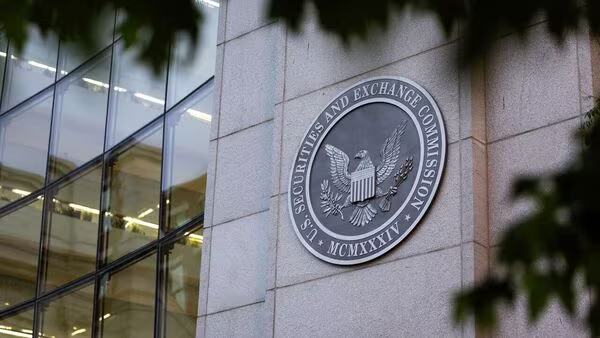
Bitwise Asset Management received initial approval from the U.S. Securities and Exchange Commission (SEC) to convert its Bitwise 10 Crypto Index Fund (BITW) into an exchange-traded fund (ETF) — a significant milestone for diversified crypto products. However, within hours, the SEC reversed course and placed the process on hold, citing issues related to several altcoin components in the fund. This sudden pause underscores the ongoing regulatory uncertainty around multi-asset crypto ETFs.
Context
Bitwise’s index fund, BITW, was designed to offer investors diversified exposure to the top ten cryptocurrencies by market cap. Its portfolio includes a range of assets beyond Bitcoin and Ethereum, such as:
- Ripple (XRP)
- Solana (SOL)
- Cardano (ADA)
- Chainlink (LINK)
- Avalanche (AVAX)
- Polkadot (DOT)
- Litecoin (LTC)
- Sui (SUI)
While BTC and ETH dominate in weight, the inclusion of several tokens that lack clear regulatory classification has complicated the SEC’s stance on the ETF conversion. These assets have previously been at the center of enforcement actions or legal scrutiny regarding their status as securities.
Main Breakdown
The SEC’s sudden halt is largely attributed to the inclusion of certain altcoins within the fund. Assets like XRP, SOL, and ADA have faced lawsuits or regulatory warnings in recent years, and none currently have standalone ETFs approved in the U.S. market.
This development echoes past instances — such as the delayed approval of Grayscale’s diversified crypto funds — where the SEC demanded further clarification on the legal status of included tokens before allowing conversion into regulated ETF products.
Despite initial optimism, the SEC’s decision reveals a fundamental hesitation to approve ETFs that aggregate a mix of cryptocurrencies, particularly those lacking established legal footing.
Market Impact
This regulatory reversal introduces further uncertainty for multi-asset crypto ETFs and could deter other issuers from advancing similar products in the short term. It also underscores the relative advantage Bitcoin and Ethereum currently hold as the only cryptocurrencies with clear enough legal standing to support ETF-based investment vehicles in the U.S.
The pause may influence Bitwise and other asset managers to adjust their fund compositions — potentially removing or minimizing exposure to risk-prone altcoins in order to secure future approvals.
Investor confidence may take a hit, particularly among those seeking diversified crypto exposure via traditional financial infrastructure.
Implications for Investors
- Caution in Diversified Products: Investors should be aware that not all crypto index products are equally viable in the eyes of regulators. Regulatory clarity around each asset remains crucial.
- Shift Toward Simpler Exposure: The delay may encourage investors to stick with Bitcoin and Ethereum ETFs until broader approval frameworks are in place.
- Need for Regulatory Vigilance: This event reinforces the importance of following SEC decisions closely, as shifts in policy or enforcement can impact fund availability and structure.
- Altcoin Risk Reassessment: Assets like XRP, ADA, and SOL could face near-term headwinds in ETF inclusion, affecting both their perceived legitimacy and institutional access.
Key Takeaways
- Bitwise’s proposed crypto index ETF received initial approval, then was abruptly paused by the SEC
- Altcoins lacking regulatory clarity — including XRP, SOL, and ADA — triggered concerns
- The pause reflects broader SEC hesitance around multi-asset crypto ETFs
- Investors should expect continued delays and structure changes in similar fund proposals
- Bitcoin and Ethereum remain the only assets with relatively stable regulatory pathways for ETFs
Final Thoughts
The SEC’s back-and-forth decision on Bitwise’s crypto index fund illustrates the regulatory tightrope facing crypto ETF innovation. While the agency may be warming to single-asset products like BTC and ETH, diversified funds remain in a gray zone due to unresolved classification debates surrounding many altcoins.
Until clearer rules are established, investors and asset managers alike will need to proceed cautiously. For now, the path forward for crypto index ETFs may require reshaping portfolios to align with the narrow regulatory acceptance that currently favors Bitcoin and Ethereum.